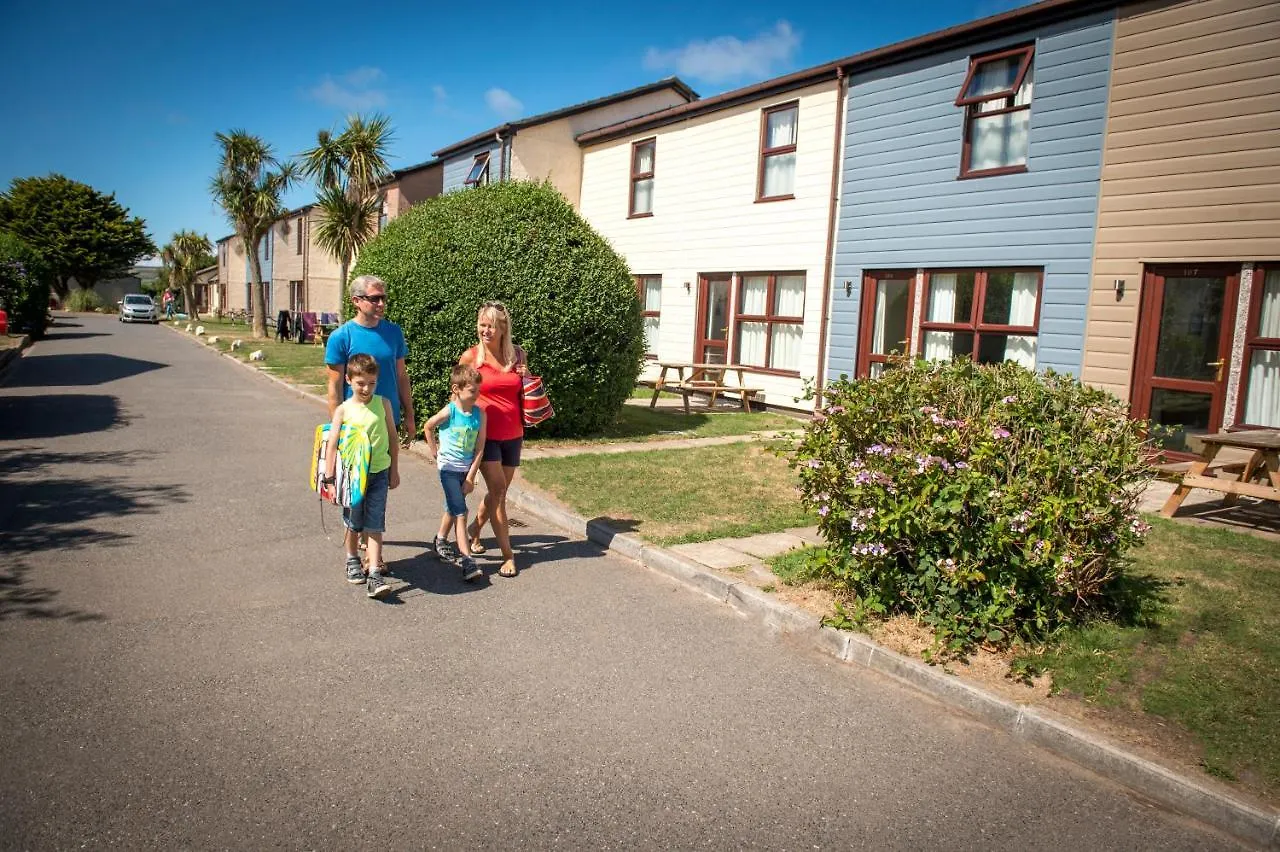
Perranporth Beach is one of Cornwall's most family-visited stretches of coastline - a broad, 3-mile Atlantic-facing beach with consistent surf, lifeguard cover in peak season, and direct beach access from the village. Families searching for accommodation nearby are typically weighing up self-catering flexibility against proximity to the sand, and whether to base themselves in Perranporth village itself or at a short drive away in a quieter rural setting. This guide cuts through the options to help you decide which property suits your group's actual needs.
What It's Like Staying Near Perranporth Beach
Perranporth village sits directly behind the beach dunes, with the main car park, surf hire shops, and beachside cafés all within a short walk of the sand. The village itself is compact and walkable, but accommodation directly in Perranporth is limited - most family-suitable properties are spread across the surrounding parishes of St Agnes, Porthtowan, and the Truro hinterland, typically within a 15-minute drive. Peak-season traffic on the B3285 into Perranporth can be slow on sunny summer mornings, so properties with free parking become a significant practical advantage. The beach draws large crowds from late July through August, but shoulder months like May, June, and September offer the same scenery with around 60% fewer visitors on the sand.
Pros:
- Direct beach access to one of Cornwall's longest and most family-safe Atlantic beaches, with seasonal lifeguard patrol
- Surrounding rural lanes and coastal paths connect to the South West Coast Path, adding hiking options beyond beach days
- Self-catering properties in this area consistently offer free private parking, eliminating the daily cost of village pay-and-display
Cons:
- No direct train or bus service runs to Perranporth Beach - a car is essentially non-negotiable for families with young children and beach kit
- Village amenities in Perranporth are limited outside summer, with several cafés and shops closing or reducing hours from October
- Accommodation within walking distance of the beach itself is scarce; most family properties require a short drive to reach the sand
Why Choose Family-Friendly Accommodation Near Perranporth Beach
Family-friendly properties in the Perranporth area almost universally lean toward self-catering chalets, holiday parks, and cottage complexes rather than traditional hotels - a format that suits families far more practically than B&Bs or standard hotel rooms. Full kitchens eliminate the cost and logistics of eating out three times daily, which adds up fast with children. Self-catering units here typically sleep four to eight guests in layouts with separate bedrooms, compared to a standard double hotel room that would require two rooms booked separately. The trade-off is that on-site facilities vary: some properties include pools and restaurants, while others are purely residential in format with only outdoor communal space.
Pros:
- Full kitchens in most units cut daily food costs significantly compared to resort hotel dining, especially for families staying a week
- Multi-bedroom layouts provide actual separation between adults and children, which standard hotel rooms cannot offer
- Properties with on-site pools, playgrounds, and bars eliminate the need to travel for entertainment on poor-weather days
Cons:
- Self-catering means no daily housekeeping or room service - families must manage their own cleaning and provisioning
- Properties with the strongest on-site facilities (pools, restaurants) are holiday parks, which have a more communal, less private atmosphere
- Peak-week pricing in August for multi-bedroom self-catering near Perranporth can exceed what a standard hotel room costs per night when calculated per person
Practical Booking & Area Strategy for Perranporth Beach
The properties closest to Perranporth Beach cluster around the B3285 Perranporth approach road and the St Agnes parish to the south, with Porthtowan sitting a further 10 minutes south along the coast. For families prioritising beach access over budget, the St Agnes corridor - particularly around Trevaunance Cove and the lanes connecting to Perranporth - provides a strong balance of rural quiet and coast proximity. Newquay, around 14 km north, offers the nearest rail connection at Newquay Train Station, but without a car, getting from Newquay to Perranporth Beach requires a bus or taxi and is not practical for daily beach trips with children. Booking for August school holidays should be made at least 6 months in advance for any self-catering property with a pool or multiple bedrooms - availability at prime family units evaporates quickly. Beyond the beach itself, families can reach the Eden Project in around 40 minutes by car, Truro city centre in around 20 minutes, and the fishing village of Padstow within an hour, making the Perranporth area a workable base for day trips across mid and north Cornwall.
Best Value Family Stays
These properties offer strong self-catering setups, free parking, and family-oriented facilities at accessible price points, making them the practical first choice for most families visiting the Perranporth area.
-
1. Perran View Holiday Park
Show on map


 Check-infrom 17:00 until 23:00Check-outfrom 08:00 until 10:00
Just a few rooms left at the best rate!
from£ 139
-
2. Mount Hawke Holiday Bungalows
Show on map


 Check-infrom 16:00 until 23:00Check-outfrom 06:00 until 10:00
Just a few rooms left at the best rate!
from£ 144
-
3. Callestock Courtyard Cottages
Show on map


 Check-infrom 15:00 until 18:30Check-outfrom 06:00 until 09:00
Hurry – almost gone at this price!
from£ 178
Best Premium Family Stay
For families wanting a larger, more distinctive property with standout features, this Newquay-based option delivers scale and style that holiday park units cannot match.
-
4. Edge14- Spacious, Stylish And Near The Beach!
Show on map


 Check-infrom 16:00 until 23:59Check-outuntil 10:00
Rooms filling fast – secure the best rate!
from£ 1349
Smart Travel & Timing Advice for Perranporth Beach
The Cornwall family holiday market is heavily compressed into the school summer holidays, and Perranporth Beach is no exception. July and August see the highest demand for self-catering properties across the St Agnes and Perranporth area, with prices for multi-bedroom units at their annual peak - booking windows of 6 months or more are standard for the best-positioned holiday parks and cottage complexes. June and September offer the most practical shoulder-season value: the beach is still swimmable, surf schools are still operating, and coastal path conditions are good, but accommodation rates can drop noticeably compared to peak August. A minimum stay of 7 nights is common at most self-catering properties during school holidays, while shorter breaks of 3 or 4 nights become available in May, early June, and October. Early October still sees mild Atlantic conditions and is increasingly popular with families who can travel outside school term - though it requires checking local school holiday calendars. Families targeting half-term weeks in late October should book at least 3 months ahead, as this secondary peak fills quickly across the Cornish coast.